Curriculum Vitae
Wooseok Daniel Shin
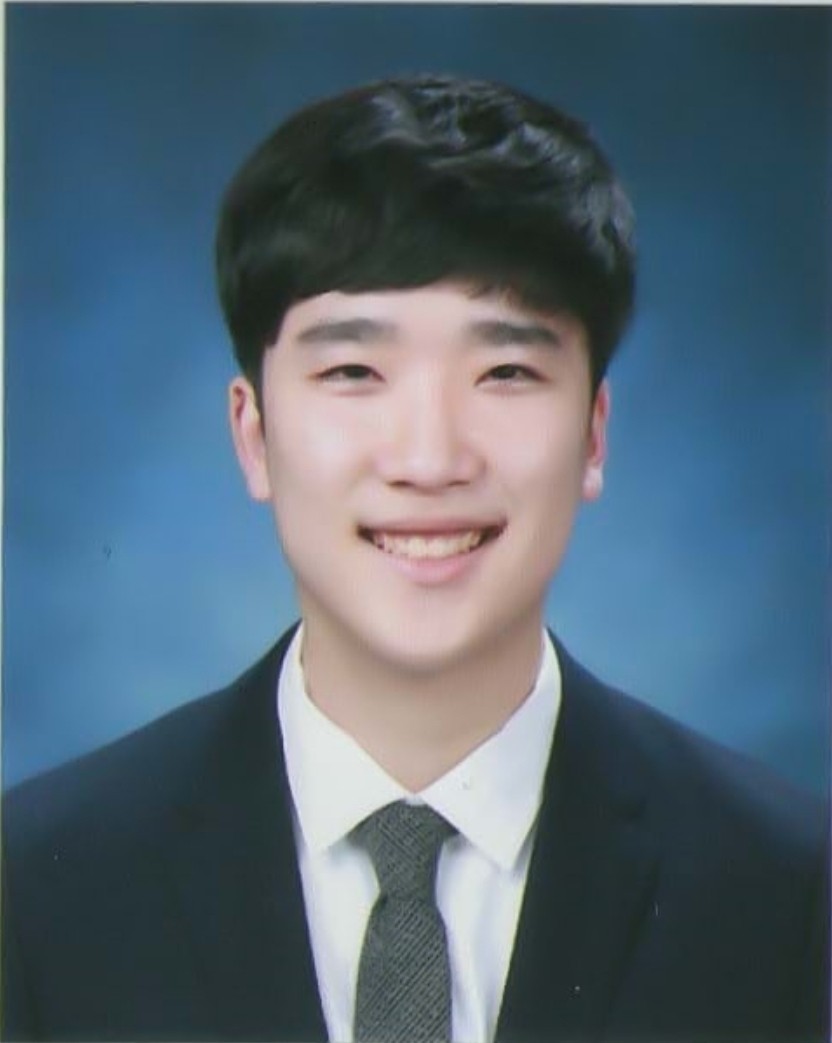
Ph.D. Candidate, Department of Electrical and Computer Engineering
Sungkyunkwan University (SKKU), Suwon, Republic of Korea
Email: swsda95@skku.edu · swsda95@naver.com
RESEARCH PROFILE
I am a Ph.D. candidate in Electrical and Computer Engineering at Sungkyunkwan University, specializing in federated and distributed learning for 5G/6G Open RAN, wireless edge intelligence, and network-aware AI systems.
My research focuses on designing learning frameworks that jointly consider data heterogeneity, communication overhead, network dynamics, resource constraints, and service-level requirements in next-generation mobile networks. I am particularly interested in communication-efficient federated learning, intent-aware network optimization, dynamic client clustering, and intelligent control for Open RAN and edge-networked systems.
RESEARCH INTERESTS
- 5G / 6G Open RAN
- Federated and Distributed Learning
- Communication-Efficient Edge Intelligence
- Intent-Aware Network Optimization
- Network-Aware AI Systems
- Data Heterogeneity in Wireless and Edge Networks
- Hierarchical Learning and Control for Mobile Networks
SELECTED RESEARCH THEMES
Federated Learning for Heterogeneous Edge Networks
My work studies how federated learning can be made more robust under non-IID data distributions, uneven client participation, and heterogeneous edge environments. I focus on dynamic clustering, personalized aggregation, relation-aware embedding, and communication-efficient model coordination.
AI-Enabled 5G/6G Open RAN Control
I design learning-based control frameworks for Open RAN environments where xApps, RIC, edge servers, and network nodes must coordinate under latency, reliability, and resource constraints. This includes intent-aware resource management, reinforcement learning-based control, and safe coordination mechanisms.
Network-Aware Distributed Intelligence
My broader research goal is to build deployable distributed AI systems that explicitly account for communication cost, network state, system heterogeneity, and service-level objectives, rather than treating the network as a passive data-delivery layer.
EDUCATION
| Period | Institution | Details |
|---|---|---|
| Mar. 2011 – Feb. 2013 | Gyeongnam Science High School, Korea | Early Graduation Specialized curriculum in mathematics, physics, and science |
| Mar. 2013 – Aug. 2017 | Sungkyunkwan University, Suwon, Korea | B.S. in Semiconductor Systems Engineering Department of Semiconductor Systems Engineering Thesis: Analysis of Vehicle-to-Vehicle Communication Protocols for Smart Car Services Advisor: Prof. Ikjun Yeom |
| Sep. 2017 – Present | Sungkyunkwan University, Suwon, Korea | Ph.D. Candidate in Electrical and Computer Engineering Department of Electrical and Computer Engineering Dissertation: Federated and Hierarchical Intelligence for Adaptive Open RAN Control under Network Heterogeneity Advisor: Prof. Jitae Shin |
RESEARCH EXPERIENCE
Graduate Researcher
Media System Laboratory, Department of Electrical and Computer Engineering, SKKU
Aug. 2021 – Present
Advisor: Prof. Jitae Shin
- Developed federated learning frameworks for heterogeneous client distributions and dynamic clustering in 5G/Open RAN environments.
- Designed intent-aware learning and resource control methods for adaptive network optimization.
- Built simulation and emulation pipelines using Open5GS, UERANSIM, ns-3, and QuaDRiGa for 5G/Open RAN evaluation.
- Led first-author manuscript preparation on federated learning, Open RAN control, and network-aware distributed intelligence.
Senior Researcher
Flowedu, Korea
Jul. 2020 – Jul. 2021
- Developed educational and system-support software for programming and algorithm-learning platforms.
- Contributed to system design, implementation, and operational improvement for online learning services.
Researcher
Computer Network Laboratory, Department of Software, SKKU
Mar. 2017 – Jul. 2020
Advisor: Prof. Ikjun Yeom
- Studied vehicle-to-vehicle communication protocols and network simulation for smart car and autonomous driving services.
- Analyzed protocol-level performance issues in vehicular network environments.
- Conducted early-stage research on networked intelligent transportation systems.
Research Intern, Photolithography Division
Samsung Electronics – Xi’an Semiconductor Plant, Samsung China Semiconductor Co., Ltd.
Jul. 2016 – Aug. 2016, Xi’an, China
- Participated in the Samsung Electronics 3rd-Grade Open Recruitment Internship Program.
- Assisted in process diagnostics and exposure equipment data analysis for DRAM production.
- Gained practical experience in semiconductor fabrication processes and production-oriented data analysis.
TEACHING AND MENTORING EXPERIENCE
TEdI / HelloAlgo - Lead Instructor and Contents Team Leader
- Taught algorithmic problem solving, Python, C++, USACO, KOI, and AP Computer Science A; supervised the design of contest-style practice problems and the construction of official test cases.
- Designed lecture materials and programming exercises for middle- and high-school students.
- Mentored students in computational thinking, data structures, algorithms, and AI-oriented project development.
IvyZen - Science Fair Research Mentor / Director
- Supervised student research projects in AI, computer science, engineering, environmental modeling, and data-driven systems.
- Guided students through research topic selection, dataset construction, implementation, paper writing, and presentation preparation.
- Mentored interdisciplinary STEM projects involving machine learning, network systems, simulation, and applied data analysis.
AWARDS AND HONORS
- 3rd Place, Undergraduate Thesis Symposium, College of Information and Communication, Sungkyunkwan University, Korea, Aug. 2017.
- Samsung Semiconductor Scholarship, Samsung Electronics and Sungkyunkwan University, Mar. 2013 – Aug. 2017.
TECHNICAL EXPERTISE
Networking and Wireless Systems
- 5G / 6G Open RAN
- Intent-aware resource control
- Network-aware distributed learning
- Edge intelligence
- Protocol analysis and network performance evaluation
Machine Learning and AI Systems
- Federated learning
- Personalized federated learning
- Dynamic client clustering
- Graph-based learning
- Reinforcement learning for network control
- Causal and structure-aware representation learning
Programming and Frameworks
- Languages: Python, C++
- Frameworks: PyTorch, scikit-learn, TensorFlow
- Simulation and Emulation Tools: Open5GS, UERANSIM, ns-3, QuaDRiGa, OMNeT++
PUBLICATIONS
See full list on the Publications page.